Tag Archives: healthcare

The perks and perils of integrated healthcare delivery: a consumer perspective

In the face of recent economic pressures, healthcare providers have been urged to seek out more cost effective methods of providing care. The pressure to treat a greater number of individuals with fewer resources has forced many providers to consolidate in order to cut costs. Consolidation has enabled smaller groups of providers to take advantage of increased buying power and shared operational and administrative resources. Larger groups of providers, contained within broader systems, have opted to join forces with large employers to participate in narrow networks or provide preventative services in the hopes of mitigating more expensive critical care.

And while many of these actions have helped reduce the expenses associated with care provision, both the government and the general public continue to criticize these organizations for the cost of healthcare services. As a method of addressing these costs, healthcare systems have been urged to transform into Accountable Care Organizations (ACOs).

While we have heard the term ACO thrown around more and more recently, they are only a small subset of the massive new health legislation. An ACO, in simple terms, are groups of doctors, hospitals and other health care providers who come together voluntarily to give coordinated, high-quality care to their Medicare patients. But providers won’t stop talking about ACOs. Moreover, while the definition of an ACO is technically only based on the approach for Medicare patients, the organizational transformation required to serve Medicare patients would inadvertently change the approach for all other patients as well.

The benefits to becoming an ACO are not just financial. Considering the pressures surrounding these organizations to decrease costs, there may also be a perceptual benefit among institutions that lead the way, particularly among their peers.

But the single most important stakeholder – the patient – may not have the same opinion. Consumers, while eager to see the cost of healthcare reduced, tend to be forgotten in the conversation around whether to become an ACO. Yes, consumers want to save money, but the value of the ACO has not been made clear to patients. They’re rarely accounted for in the discussion, as the focus is mainly set on the financial benefit to the provider.

The reality is that these lower costs are seldom passed on to them, and in the face of universal coverage, will be even less accessible to them. Instead of cost concerns, consumers should be more interested in how an ACO may impact the care they receive or the access they are provided.

Universally, both providers and consumers agree that quality is important. But the importance of quality is not up for debate. The most important factor to consider is how each party defines ‘quality’ care. Providers define quality based on a set of metrics, usually linked to outcome data. Consumers, on the other hand, judge quality on the provider’s competence and compassion, inherently combining the experience with the outcome to define ‘quality’. This becomes an issue in how consumers may perceive ACOs. When care is provided by a party that also has financial stake, it may signal conflict of interest.

Part of becoming an ACO is better managing the provision of services for a patient across a variety of needs in order to deliver more cost effective care. For an organization to have the breadth of control and perspective that is needed to function as ACO, they need to be able to provide all healthcare services for each patient. This creates increased visibility but drastically reduces provider choice for consumers. Healthcare providers have traditionally considered themselves to be exempt from being seen as a consumer service in a capitalistic market, but consumers are slowly removing the exemption. They see their co-pay as their currency for a right to choose a provider, on credentials, recommendations or reviews. ACOs are meant to restrict this choice by providing consumers with more limited options, which may impact a consumer’s view of the ACO as a whole.

As providers consider the pros and cons of becoming an ACO, they should not only look at the financial impact of the decision but also what it says about them to consumers. Despite the fact that 700,000 Americans are forced into bankruptcy every year due to medical bills, they are willing to pay more in order to retain their right to choose a provider and not be treated as a financial liability.

Should providers choose the ACO route, transparent communication will be critical in assuring consumers that their best interests are also in mind.

Leave a comment

Filed under Payors

The language of healthcare: What does healthcare literacy really mean to patients?

Healthcare Literacy is About Knowing How to Care for the Ones we Love

Healthcare Literacy is About Knowing How to Care for the Ones we Love

With an expanded set of players and an ever evolving set of regulations and mandates, how is the average patient supposed to keep up? If that’s not enough, add to it an influx of technology, billing codes, and business models, and then try to make sense of it. Working in the industry, I often get headaches trying to unravel what every piece of legislation means and its implications to each of the players.  As a spectator, I couldn’t even begin to imagine what it must  be like to have to understand the impact of the changing landscape on me and my loved ones.  When we talk about healthcare literacy, we really ought to be discussing fluency in the unique and overly complicated language of healthcare.  Value-based care. Accountable care organizations. Electronic health records. Healthcare information exchange. Individual mandate. Outcome-based reimbursement. I’m pretty sure I can keep going, but why bother? Outside of those in our profession, and  maybe the politically keen, these works are no more than political jargon – over used and worthless. Beyond the language itself, healthcare literacy also has to do with one’s ability to navigate the system. This part of healthcare literacy is why I chose this profession.

My grandmother has been in and out of hospitals for the last decade. She has dementia, diabetes, depression, Alzheimer’s, and is morbidly obese.  She’s had several strokes, and most recently a cerebral hemorrhage that nearly claimed her cognitive skills. Not to make matters worse, she doesn’t speak a lick of English. A medical transport accident claimed her ability to walk five years ago, and so she has been bed-bound, in a nursing home. My grandmother’s health, while poor, is not really what drew me to healthcare. In fact, it was my mother’s role as her advocate that sent me up a wall.  One day, after my grandmother’s second stroke, my mother was looking for a nurse in the ICU of the hospital my grandmother had been admitted to. Apparently, the needle from the IV drip had come out, and was dripping onto the bed, and not into my grandmother. First of all, no alarm went off, but worse, no nurse was to be found.  What if the medication in that drip was critical to my grandmother’s health? For 45 minutes, my mother searched hi and low for help, but she didn’t want to sound the alarm, because she didn’t know if it was critical, and moreover, she didn’t know who to ask. The nurses kept saying they’d send someone over, but no one came.

Rather than spending time with my grandmother, my mother was running around, confused, worried, and entirely overwhelmed. She was ill-equipped to deal with the situation, and no one was there to empower her.

For me, this was the tipping point, but my appreciation for the issue didn’t fully sink in until the next major incident.

Less than six months later, my grandmother was back in the nursing home. She had a new roommate, as her previous one had passed on.  The new roommate didn’t appear to be an issue, but the situation that developed was quite possibly the most emotionally difficult one I’ve ever had to deal with. I found out (from my mother, who didn’t want to make a fuss) that the new roommate was rummaging through my grandmother’s belongings, turning my grandmother’s TV off, and closing the door to the hallway. To an average person, this appears to be nuisance at worst, but to my non-English speaking person, the TV was her only life line, as we had spent months arranging for Russian networking to come through it, and a closed door  could mean the difference between life and death to a bed-ridden individual, if something were to happen.  The end of the line occurred when I found out this roommate threatened my grandmother’s life. My mother had no idea what to do. She contacted my grandmother’s non-responsive, disengaged social worker, to no avail. As a result, my mother was stressed, overwhelmed, and taking time off of work so that she could be in the room with my grandmother. She finally told me what was going on.  I couldn’t believe it. Why hadn’t she gotten a response from the social worker, who was supposed to be an advocate on my grandmother’s behalf? Why hadn’t she gone to the hospital administrator to seek intervention? Why was I only hearing about this now? The truth is, she was didn’t know who to go to after the social worker failed her. Moreover, she was afraid that if she escalated the situation too far, it would impact the care my grandmother received. Plain and simple, she was afraid of retribution for speaking up. I was shocked – how can the healthcare system foster such perceptions?

Within 24 hours of learning about the situation, I had already dealt with the social worker, whom I thoroughly chastised for her negligence, conveyed the situation to the administrator, and received word that my grandmother would be given 24/7 one-on-one nursing care until the situation was resolved. Yes, I threatened to call my Ombudsmen, and even sue if something happened to my grandmother under their watch when they knew about a situation that involved a threat of bodily harm.  My mother shouldn’t have needed me to know how to handle the situation, and what frightens me most is how she would have managed without my intervention.  I’ll challenge the average consumer or caregiver to even know what an Ombudsmen is.

Healthcare is very personal, but because it is so personal, and full of emotion, it has the capability of making us feel powerless, overwhelmed, worried, and distracted. I do not want my mother to ever feel these things again, or anyone to feel the way my mother felt in caring for my grandmother.  Healthcare literacy is more than just a vocabulary lesson or a lecture on hot topics, but it is the ability to understand and navigate the healthcare system – to know when you need to be your own advocate, and when you need to ask questions. Healthcare literacy is about feeling empowered in your own healthcare, as well as for those whom you care for.  At the end of the day – it’s our responsibility, to foster healthcare literacy. This means:

  1. Understand the higher order emotions that patients and their caregivers feel
  2. Identify the situations where these emotions develop and can be impacted
  3. Create solutions to ensure these situations are curated for the patient or caregiver.

Leave a comment

Filed under Other Rants & Raves, Providers

Healthcare apps – the trend towards integration

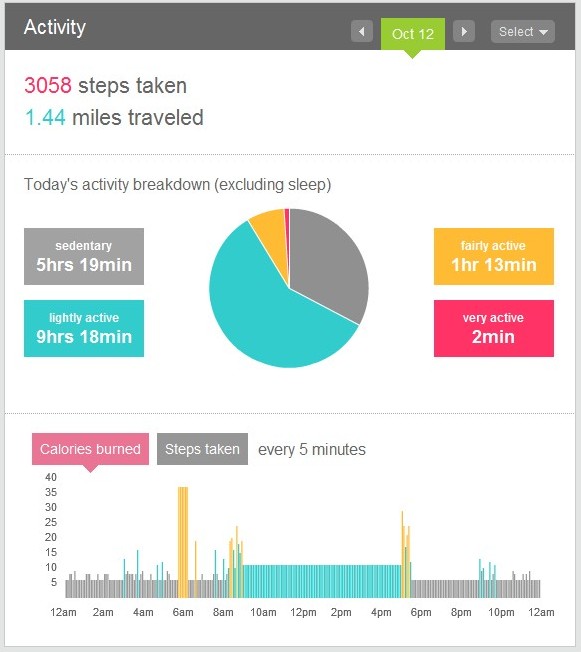
I was on the customer service line at Best Buy to return a pair of headphones when I first saw it: the intersection between technology and personalized medicine. Ok, so it actually first broke through to the mainstream market on the back of the Wii platform via Wii Fit, but this wasn’t just another healthcare game.  As I stood in line, I looked at the wi-fi enabled scale and the electronic sleep monitor disguised as a bracelet, brought to you by FitBit.FitBit is a tracking device, which allows the user to measure steps taken, calories burned, stairs climbed, and quality of sleep, an extension of the performance monitors athletes have been using for years.

FitBit Dashboard

FitBit Dashboard

To me, the question wasn’t as much about whether I wanted one (I did, and have since bought the FitBit One tracker and FitBit Aria wi-fi scale), or whether others did, but how does this tool fit into the grand scheme of things?

The origin of this question actually had nothing to do with my encounter with the FitBit. In fact, it occurred to me after having read an article about the top apps in healthcare. The article cited a study of more than 15,000 apps that currently exist under the category of healthcare. 15,000! Realistically speaking, they don’t all serve the same purpose, address the same issues or even target the same set of users. These 15,000 apps can be broken down into a variety of sub-categories, including drug reference, communication, medical education, EMR access, among others. At the same time, both the disparity in sub-categories and the sheer mass of apps brought to mind the question: how do all these tools (some actually impressive, useful even) play together? The biggest dilemma that healthcare is dealing with is not a lack of solutions, or a lack of participants. In fact, there are too many players, and that is exactly what has created the problem. Our system is fragmented into providers, payers, pharmaceutical and healthcare technology companies, and academia, and no one speaks the same language.

I appreciate the healthcare information exchange initiative, and its purpose to create a common language, but it still focuses only on creating a common language for a single sub-sector. I liken this initiative to the different regions in India, each with their own dialect, but capable of communicating with one another with a common language despite their differences. The difficulty is that countries outside of India each have their own language, which then requires a common language to enable communication between countries.  While the process starts with communication within a country, or sub-sector, it needs to transcend sub-sectors. In her book, Make Your Mark!, Dr. Freda Lewis-Hall calls for metacollaboration. By metacollaboration, Dr. Lewis-Hall means cross-industry collaboration to ensure better, more integrated solutions. I wholeheartedly agree. We need to start speaking a common language, between and across sectors and stakeholders. The function of technology shouldn’t be to just share or aggregate information, but enable greater integration across informational components. So whether it’s a consumer-oriented app, or a sector-specific innovation, the role technology should play is one that simplifies and integrates. To that vain, I look forward to the next generation of gadgets and gizmos that allow me to consolidate my footprint rather than expand it, and make me feel empowered rather than overwhelmed.

Leave a comment

Filed under Other Rants & Raves

Did you just use the ‘C’-word?

It’s not what you think – well, not exactly. I’m actually referring to the word “customer.” But within the healthcare industry, using it to describe patients is sacrilegious.  We are perfectly comfortable using it to describe the folks that buy other goods and services, so why is it such a dirty word in healthcare? More importantly, what are the implications if patients are, in fact, customers?

A customer, by definition, is a recipient of a good, service, product or idea obtained from a seller, vendor or supplier for a monetary or other valuable consideration. When it comes to hospitality, retail, packaged goods, electronics and travel, we have gotten used to defining the individuals that purchase as customers. So why not healthcare? After all, a patient by definition is a person receiving or registered to receive medical treatment. A patient is someone that makes purchases in the healthcare space.

But in reality the word patient implies so much more, which is why we have yet to update the nomenclature and our thinking about what it means. Fundamentally, the term patient signals a relationship – a human element of care – that is not represented by the term “customer.” Customer implies transaction – something cold and empty, replete of human emotion.

By acknowledging that patients are customers of healthcare, we can start approaching the system in a different way. Rather than subjects of medicine, as customers, these individuals need to be served.

Customer is more than just a word; it’s a state of mind. A state of mind that has been slow-going in healthcare. Shifting the power from clinicians to customers has implications.

1. Customers have choice

Insight: According to the 2012 Census, there are nearly million practicing physicians in the US. Most Americans choose from a selection of doctors, making a decision based on recommendation, insurance network, location, availability, certification and presumed quality. No different than shopping for a TV, as of 2012, consumers will also be looking at Consumer Reports: Health to facilitate the decision.

Implication:   Quality is not enough. A friendly smile is not enough. The departure from the all-too traditional doctor-patient relationship model means that healthcare will need to step it up.  No different than picking an airline, safety is considered tablestake, and customer service will be the way to differentiate and attract a new patient population.

2. Customers are resourceful and informed

Insight: This is the digital age. WebMD and Mayo Clinic Symptom Checker have enabled individuals to get smarter about their health. And while some medical professionals might find self-diagnosing irritating, it’s a reality. Patients are coming to their physicians with printed out diagnoses and skipping their general practitioner altogether (according to research from the Archives of Internal Medicine, 41% of appointments are with specialists, for many of which as the first point of contact). Access to information has also created an excess of content, difficult to digest and even more difficult to navigate. At the end of the day, consumers are equally overwhelmed as they are (mis)informed.

Implication: No different than a concierge at a hotel, we need to curate the healthcare experience. Rather than fighting against the information, we need to empower. When I am buying a TV, I want someone to tell me which specs are important and which are not important. Healthcare providers will no longer be limited to diagnosing and treating, but extending their role in curating information

3. Customers seek value

Insight: I recently listened to a TedMed talk that disputes the idea of patients as customers, in part because they cannot discriminate on price. While it is mostly true that paying more does not imply better quality (few physicians charge a premium or choose not to accept certain forms of insurance in light of their credentials in a particular specialty), we forget that a majority of individuals aren’t just deciding on which doctor to go to, but whether they even need to go. A study conducted by American Physical Therapy Association found that 40% of the population that suffers from lower back pain never sees a medical professional!  As patients – they are already in the door. As customers, they don’t always get to the door. Not every ailment is worth a doctor’s appointment, or rather, not every ailment is worth paying a co-pay.

Implication:  We need to reevaluate the value proposition and re-imagine the delivery of care. This means making sure that customers are both getting what they pay for and understanding the value of what they are getting. Beyond that, it is also necessary to deliver more ‘a la-carte’ care, with choice-based services through a wider variety of access points. For example, if I can only afford $20, what can I get for that? On the flip side, if I am willing to pay more, what more can I get – can I get it digitally? Can I text a doctor? In other words, what is the business lounge of healthcare, versus the economy class fare?

4. Customers exist outside of healthcare

Insight: Unlike the word “patient,” which lives within the confines of healthcare, “customer” is a universal term. Recognizing patients as customers shines a light on the fact that individuals who seek care from a healthcare provider are also being served by hotels, restaurants, mobile carriers and airlines. As customers, they have developed a higher set of expectations.

Implication: Waiting an hour for an appointment is no longer acceptable, nor will it be rewarded with repeat business. Transparency will play a greater role in how consumers choose. I’ve heard the lack of transparency at a hospital being compared to that at a car mechanic – “It’ll cost $100 for me to take a look and I don’t know what it will cost to fix until I’m in there.”

It’s not about talking transactions – because at the end of the day, clinical care will always boil down to the little things a nurse does to make the experience better. But it is about embracing the fact that patients have more choices now more than ever. We need to not only anticipate their wants and needs, but also think outside the box.

2 Comments

Filed under Other Rants & Raves, Payors, Providers

The fight for customer: regional vs destination hospital

Years ago, men and women from all over the country flocked to Cleveland, OH, Baltimore, MD, and Rochester, Minnesota for the answer. Local hospitals were not equipped with the right tools to diagnose and treat serious medical conditions. Consumers were not willing to receive that kind of care in their hometowns. In fact, when consumers were asked about why they would go to Mayo Clinic, Cleveland Clinic, or Johns Hopkins, the answer was usually the same.  Hopeful consumers were frustrated with their experiences at local providers, and articulated the same hope for a better experience with greater access to the latest medical knowledge – essentially a different prognosis and a better chance, from those more qualified. When local providers left them wondering, consumers sought out these destination hospitals for the answer, or their last chance for a different answer.

Today, community hospitals are competing with destination centers for patients on the same playing field of high-touch and high-technology.

To further enable the decentralization of competition, many of these world-class hospitals are providing access expertise through local providers. Does this eliminate a need for these healthcare meccas or introduce an integrated pipeline to ensure the next generation of patient flow?

Leave a comment

Filed under Providers

In Search of That ‘Moment of Truth’

Where does the road to experience begin? End? And why are we so obsessed with limiting ourselves?

When marketers map customer experience, they start by defining a beginning and an end. But consumers experience a brand in an integrated ecosystem, replete of definition. In fact, when we think of improving experience for a particular brand, we typically look at touch points that are knowingly controlled by that brand. Let’s say I’m in charge of Walmart’s experience– I’m probably looking at the parking lot, the entrance, the signage, the store layout and wayfinding, customer service, the checkout line, the bathrooms. The list goes on.  Every detail is considered, from the time you enter the parking lot until you drive off. But if there is construction outside, or no traffic light at the intersection of the parking lot, it’s not Walmart’s problem. Or is it?

While our customers might become frustrated with these obstacles, we don’t link the frustration with the brand as a singular experience – but what if we did? P&G sometimes refers to this as the first moment of truth. In P&G’s view of the world, the first moment of truth occurs at the shelf, before you buy and experience the product. It’s the experience before the experience. At this point, the brand can differentiate and articulate 3 of our 4 Ps: price, placement, and packaging. The goal is not only the sale, but also the experience of encountering the product. What is the first moment of truth for a brand that is an experience?

What is the first moment of truth for Walmart? Where does the experience start?  The front door to the mall in which your retail space resides? The highway ramp? The street outside the store, or the transportation that takes you there? What if the brand experience started the moment you walked out of your house, when you first acted to seek out the experience? If there’s construction on the sidewalk outside of Walmart, how can Walmart work with urban planners to better accommodate customers and enhance the experience offset by construction? What if Walmart could touch the entire journey, door-to-door?

Not too long ago I was flying with Delta Airlines, and as I went through security I caught sight of an expedited TSA lane. It was a lane with no line, no requirements to take off your shoes and belt or to take your laptop and liquids out of your bag. I wondered, how does the TSA pick the lucky few that get to use that lane? To my surprise, the TSA agent guided me in that direction. What had I done to earn such a privilege?

Apparently, my loyalty to Delta had enabled me to take advantage of this travel perk. When I think of my experience with airlines, I think of schedules, planes, seats, upgrade frequency, in-flight meal options, entertainment, or attendants… definitely not the dismal experience that security usually entails. I would have never extended my associations with Delta beyond the terminal, let alone into the airport. I never thought of my airline as having anything to do with my airport experience. In fact, I see LGA and JFK as different brands, have unique perceptions of them altogether and see Delta completely powerless and at the airports’ whim. But all of a sudden, the headache associated with the airport experience was alleviated due to Delta’s involvement. They simplified travel for me, and in doing so, earned a customer for life. I know this is not something they control, but they obviously influence it. This was their “first moment of truth” – my experience before I had a single interaction with the airline. They’ve managed to extend their experience beyond. What else could they do? Delta door-to-door?

We know that our customers are overlooking parts of their experience, not always connecting the dots. The fact is, brands are missing out on opportunities to interact with customers. By failing to address important parts of their experience, they are inadvertently letting them down. But why? The reason brands don’t actively pursue these things is because they are tough, expensive even, but it’s when brands tackle the big issues, they get the bigger payoff – the lifetime customer.

What have other brands done? Mayo Clinic has seen success by addressing unseen opportunities as well. When you’re visiting Mayo Clinic, it’s probable that either you or a loved one is ill, and there is undoubtedly stress involved. Once you’ve arrived, the Clinic is focused on alleviating that stress. But how could they alleviate it sooner? While not marketed, the hospital offers a concierge service to help patients coordinate travel. Someone helps arrange your flight, and upon arrival to the airport a Mayo Clinic representative is waiting to pick you up. If needed, they’ll even send a nurse to accompany the patient from their home.

The Clinic stages an experience before the patient expects to have one, but has it worked? I’ve spoken with patients who explain the anxiety and stress of coming to Mayo, and how much relief they experienced when someone came to pick them up, talked to them about the area, about the Clinic process – well before they even entered the hospital. Before they entered the defined, controlled experience.

How do you define the extended experience? What can a brand control or influence in order to encourage purchase and loyalty? We know what we can control, but there is so much more out there that we can influence. So I challenge the world of marketing to redefine endpoints, extend experience, and in Apple’s language: think different.

Leave a comment

Filed under Other Rants & Raves, Providers

Consumerism in healthcare

Healthcare has traditionally consisted of the patient-doctor relationship. A family member would provide a recommendation and hopefully the doctor was accepting new patients. The doctor was an authority figure, while the patient was indebted to his or her services. In most cases, one would maintain this relationship for decades, if not generations.  Today, a new healthcare system gives rise to a new type of relationship. In fact, the tables have turned: patients are no longer restricted accessing care, while physicians are looking for new ways to build their patient books.  Patients have greater expectations of physicians and are more discriminate in the selection of their care. They are no longer the subjects of medicine, but consumers of it.

Consumers are shopping for their healthcare more than ever before

The word “consumer” has not been historically accepted in the field of medicine, as it implies a sales process between the physician and his or her subject, and diminishes the relationship.  However, in today’s world of increasing options and educated consumerism, it is just that and ought to be embraced. This means, when we think about the experience, we need to stop thinking about it in terms of the patient experience and start talking about consumer loyalty. Treating patients as consumers acknowledges the scrupulous selection process and opens up an opportunity in the field of medicine.  From a clinical standpoint, care needs to meet a certain quality standard to be deemed acceptable; however, there are ways to create higher touch experiences for those that want it. In this choice model, a healthcare provider could create different levels of care for the open market – ranging from the Kia of healthcare, to the Mercedes. The opportunity is to capitalize on the choices consumers have in healthcare – to let them receive their care ‘a la carte’.

Leave a comment

Filed under Providers

Branded generics: more than just a number

more than just a number

Generic pharma company, Teva, prints their name alongside the pill number, which identifies the manufacturer, type of medication and dosage

I was recently prescribed Amoxicillin after going to the dentist.  As the drug has been in the market for ages, it was available in generic form.  When I opened the bottle, I noticed the capsules were printed with both an identifying number (that identifies the pill manufacturer, medication type, and dosage), and the manufacturer brand. Why put a brand on a generic? And which brand? Manufacturer or old pill name? Should Pfizer put “Pfizer” on the generic of Lipitor or should they put “Lipitor” and does it really matter? Is there a value to it?

As major blockbuster drugs come off patent and face their generic rivals, does that name still have value?  With parents that take an average of six pills every morning, I am intimately aware of the ritual that is involved in maintenance medication.  There is a routine established – from years of asking for the same script, and from constant regurgitation of current medications at every visit to a new doctor. It becomes a state of mind – “I’m on Lipitor” – whether it’s Lipitor or its pharmaceutical equivalent.  Having the Lipitor insignia on a pill might actually reinforce confidence among consumers, providing an added layer of stability midst a world of failing health. In fact, Pfizer may even be able to secure more scripts for their Lipitor, than competitively priced generics, for this convenience. The other side of the question is whether generic manufacturers build brands by creating trust and brand familiarity. Could they convince consumers, or physicians, to ask for their version? Could there be a household name in generics?

Leave a comment

Filed under Life sciences

Implications of the Supreme Court decision

Last week, the Supreme Court decided that it was constitutional for ObamaCare to require every American to have health insurance. Not in a while has a Supreme Court decision been able to impact every single American. While this ruling has a significant political impact, the impact on the healthcare system is more worrisome. Not only will this change healthcare consumption, but it will also create changes in the offer. Insurance companies will not be able to discriminate against high-risk consumers, and have to find ways to cover those that can not afford to pay. In order to meet market demands, payors will likely have to develop a set of products to meet emerging needs, undifferentiated from one another. As a result, it will be more important to optimize and differentiate on the customer experience to reach the expanding addressable market. What about the providers, that are already understaffed, and eating losses on charity care and declining reimbursement rates? Will universal coverage also change healthcare consumption, encouraging more people to seek care, and if so, can our system handle it?

Leave a comment

Filed under Payors, Providers