
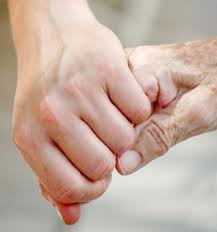
Healthcare Literacy is About Knowing How to Care for the Ones we Love
With an expanded set of players and an ever evolving set of regulations and mandates, how is the average patient supposed to keep up? If that’s not enough, add to it an influx of technology, billing codes, and business models, and then try to make sense of it. Working in the industry, I often get headaches trying to unravel what every piece of legislation means and its implications to each of the players. As a spectator, I couldn’t even begin to imagine what it must be like to have to understand the impact of the changing landscape on me and my loved ones. When we talk about healthcare literacy, we really ought to be discussing fluency in the unique and overly complicated language of healthcare. Value-based care. Accountable care organizations. Electronic health records. Healthcare information exchange. Individual mandate. Outcome-based reimbursement. I’m pretty sure I can keep going, but why bother? Outside of those in our profession, and maybe the politically keen, these works are no more than political jargon – over used and worthless. Beyond the language itself, healthcare literacy also has to do with one’s ability to navigate the system. This part of healthcare literacy is why I chose this profession.
My grandmother has been in and out of hospitals for the last decade. She has dementia, diabetes, depression, Alzheimer’s, and is morbidly obese. She’s had several strokes, and most recently a cerebral hemorrhage that nearly claimed her cognitive skills. Not to make matters worse, she doesn’t speak a lick of English. A medical transport accident claimed her ability to walk five years ago, and so she has been bed-bound, in a nursing home. My grandmother’s health, while poor, is not really what drew me to healthcare. In fact, it was my mother’s role as her advocate that sent me up a wall. One day, after my grandmother’s second stroke, my mother was looking for a nurse in the ICU of the hospital my grandmother had been admitted to. Apparently, the needle from the IV drip had come out, and was dripping onto the bed, and not into my grandmother. First of all, no alarm went off, but worse, no nurse was to be found. What if the medication in that drip was critical to my grandmother’s health? For 45 minutes, my mother searched hi and low for help, but she didn’t want to sound the alarm, because she didn’t know if it was critical, and moreover, she didn’t know who to ask. The nurses kept saying they’d send someone over, but no one came.
Rather than spending time with my grandmother, my mother was running around, confused, worried, and entirely overwhelmed. She was ill-equipped to deal with the situation, and no one was there to empower her.
For me, this was the tipping point, but my appreciation for the issue didn’t fully sink in until the next major incident.
Less than six months later, my grandmother was back in the nursing home. She had a new roommate, as her previous one had passed on. The new roommate didn’t appear to be an issue, but the situation that developed was quite possibly the most emotionally difficult one I’ve ever had to deal with. I found out (from my mother, who didn’t want to make a fuss) that the new roommate was rummaging through my grandmother’s belongings, turning my grandmother’s TV off, and closing the door to the hallway. To an average person, this appears to be nuisance at worst, but to my non-English speaking person, the TV was her only life line, as we had spent months arranging for Russian networking to come through it, and a closed door could mean the difference between life and death to a bed-ridden individual, if something were to happen. The end of the line occurred when I found out this roommate threatened my grandmother’s life. My mother had no idea what to do. She contacted my grandmother’s non-responsive, disengaged social worker, to no avail. As a result, my mother was stressed, overwhelmed, and taking time off of work so that she could be in the room with my grandmother. She finally told me what was going on. I couldn’t believe it. Why hadn’t she gotten a response from the social worker, who was supposed to be an advocate on my grandmother’s behalf? Why hadn’t she gone to the hospital administrator to seek intervention? Why was I only hearing about this now? The truth is, she was didn’t know who to go to after the social worker failed her. Moreover, she was afraid that if she escalated the situation too far, it would impact the care my grandmother received. Plain and simple, she was afraid of retribution for speaking up. I was shocked – how can the healthcare system foster such perceptions?
Within 24 hours of learning about the situation, I had already dealt with the social worker, whom I thoroughly chastised for her negligence, conveyed the situation to the administrator, and received word that my grandmother would be given 24/7 one-on-one nursing care until the situation was resolved. Yes, I threatened to call my Ombudsmen, and even sue if something happened to my grandmother under their watch when they knew about a situation that involved a threat of bodily harm. My mother shouldn’t have needed me to know how to handle the situation, and what frightens me most is how she would have managed without my intervention. I’ll challenge the average consumer or caregiver to even know what an Ombudsmen is.
Healthcare is very personal, but because it is so personal, and full of emotion, it has the capability of making us feel powerless, overwhelmed, worried, and distracted. I do not want my mother to ever feel these things again, or anyone to feel the way my mother felt in caring for my grandmother. Healthcare literacy is more than just a vocabulary lesson or a lecture on hot topics, but it is the ability to understand and navigate the healthcare system – to know when you need to be your own advocate, and when you need to ask questions. Healthcare literacy is about feeling empowered in your own healthcare, as well as for those whom you care for. At the end of the day – it’s our responsibility, to foster healthcare literacy. This means:
- Understand the higher order emotions that patients and their caregivers feel
- Identify the situations where these emotions develop and can be impacted
- Create solutions to ensure these situations are curated for the patient or caregiver.
 I <3 Healthcare